
Culatello di Zibello PDO
Product weight: 2,3 kg
Minimum seasoning: 18-24
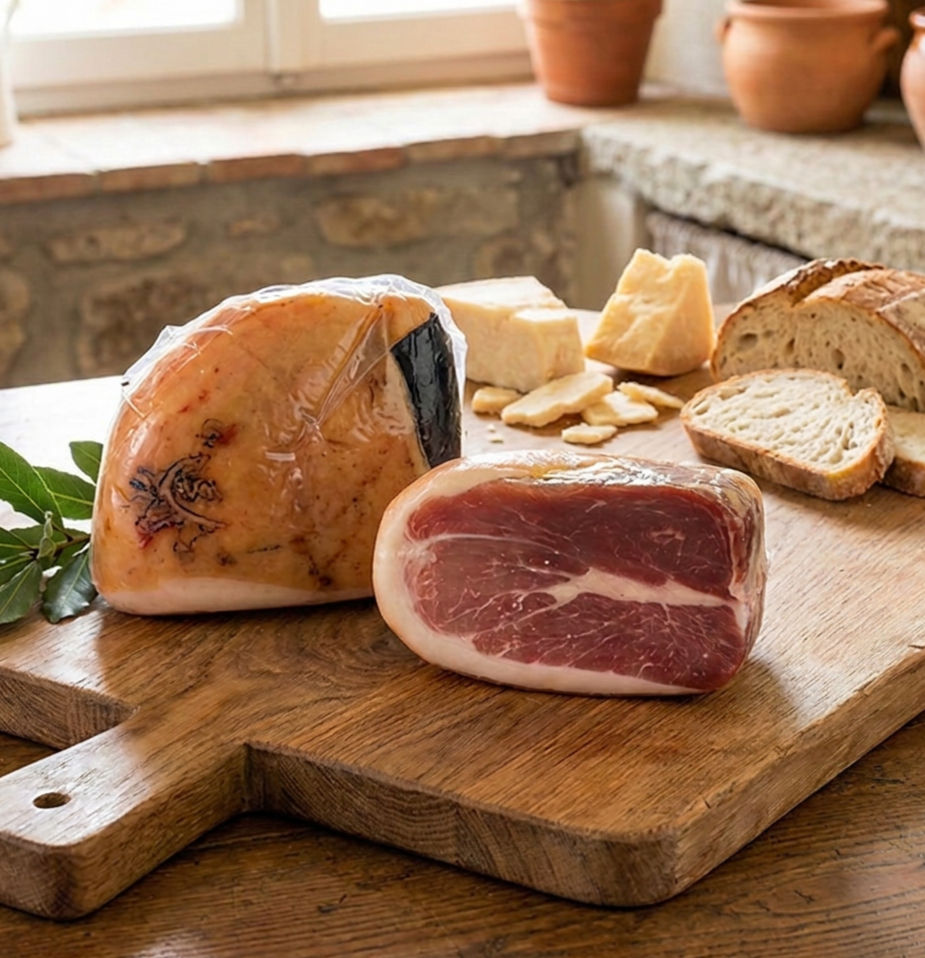
The product arrives vacuum and ready to be sliced
IMPORTANT: The weight of the cured meats being artisanal can never be precise to the detail. If there are differences in weight, we will compensate for small weight differences by varying the quantities of other products in the cart, but there will never be price changes.
Culatello di Zibello PDO - Slice "2,3 kg
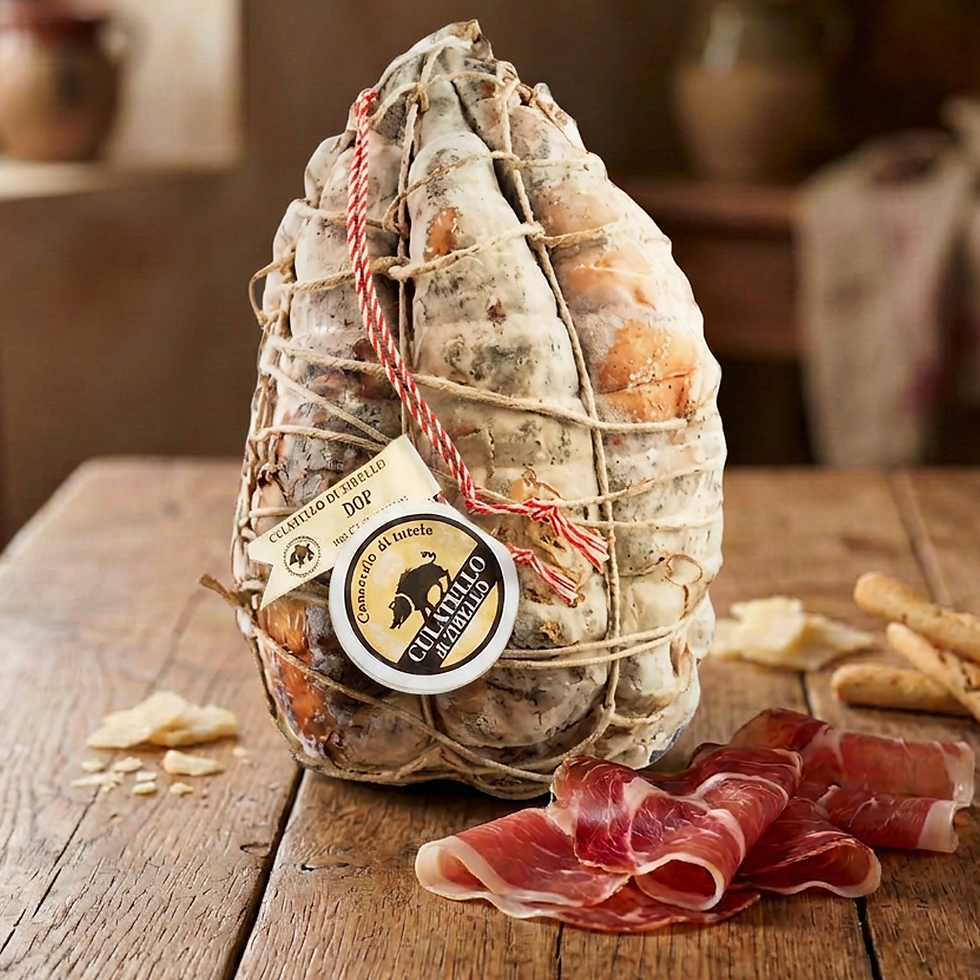
Culatello di Zibello PDO is an uncooked and seasoned cured meat product, wrapped in a wide-mesh net of string, obtained from the legs of pigs belonging to the Large White, Italian Landrace and Duroc breeds, either pure or derived.
Culatello di Zibello PDO is part of the gastronomic and cultural heritage of the production area, a territory lying along the Po river, whose climatic characteristics decisively influence the maturation of the product, defining its unmistakable organoleptic properties.
The production area of Culatello di Zibello PDO covers the municipalities of Polesine Zibello, Busseto, Zibello, Soragna, Roccabianca, San Secondo Parmense, Colorno and part of the municipality of Sissa Trecasali in the province of Parma, in the Emilia-Romagna region. The pigs used for the production of Culatello must come strictly from herds located in the regions of Lombardy and Emilia-Romagna.
Culatello di Zibello PDO consists of the finest muscle bundles of the boned leg of the pig. The muscle mass is salted manually dry. The salting operation lasts from one to six days. For filling, swine urinary bladders or natural pig casings are used. It is then tied by hand with several rounds of string. Before maturing, the cheese is further drained for about a week and then dried, which can vary from 30 to 60 days. The maturing phase of the product must be carried out in rooms where there is sufficient air exchange and temperature between 13 and 17 ºC for a period of more than 10 months.
The Culatello di Zibello PDO has its historical roots in the memory of rural culture. It is said that already in 1332, at the wedding banquet of Andrea dei Conti Rossi and Giovanna dei Conti Sanvitale, they were given as gifts to the spouses "appreciated culatelli". The first official mention dates back to 1735, in a document of the City of Parma. In that century the culatello probably constituted a royal gift: the pledge that the faithful subjects did to their lords. Moreover, this tribute could also be charged with symbolic significance: an exchange of "investitures". The culatello is in fact "invested", covered and tightly bound in its bladder or in pig gut. The first literary references date back to the nineteenth century, by the Parmesan dialect poet Giuseppe Callegari, who in his novel cites two specialties of Parma among those "ammannite in Paradiso: the rice bomb and culatello", and the sculptor Renato Brozzi, who exchanged opinions on culatello with the great poet Gabriele D'Annunzio.
Characteristics
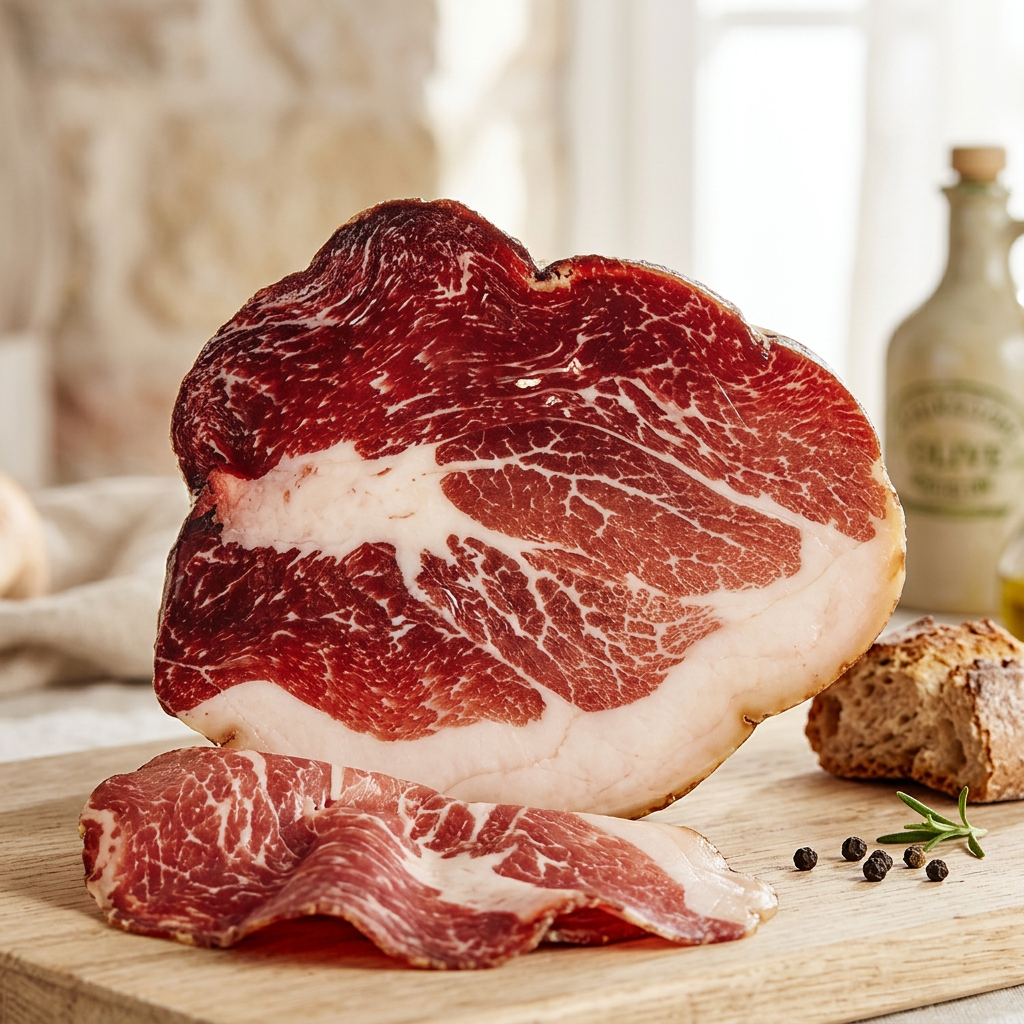
Culatello di Zibello PDO has a pear shape and a weight of 3-5 kg. When cut the slice has a uniform red color and the fat between the different muscle bundles is white. The aroma is intense and characteristic, the taste is sweet and delicate.
Pairings
Culatello di Zibello PDO is the prince of cured meats, famous for being the most prized of all. Excellent on its own as an appetiser or gourmet second course, you can also pair it with hot crostini and butter. Also perfect in the company of other Emilian cured meats and cheeses or with a tasty vegetable giardiniera.
Pork, salt, pepper, natural flavouring.