


Rice of the Po delta PGI Arborio
Product weight: 800 gr
Producer: Linea Fico
Bag packaged in a protected atmosphere
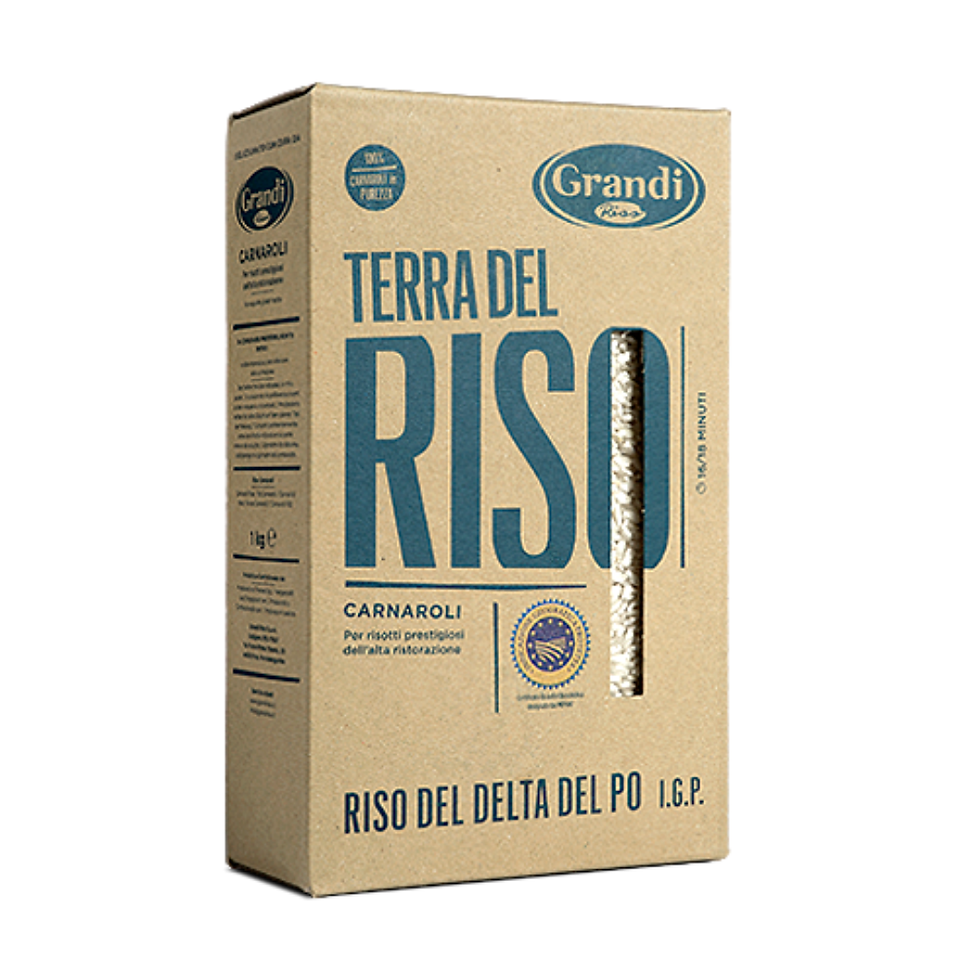
On the side is illustrated the rice cultivation process of the Po Delta PGI with the historical photo of the mondine going to the rice fields.
Rice of the Po Delta PGI - Arborio
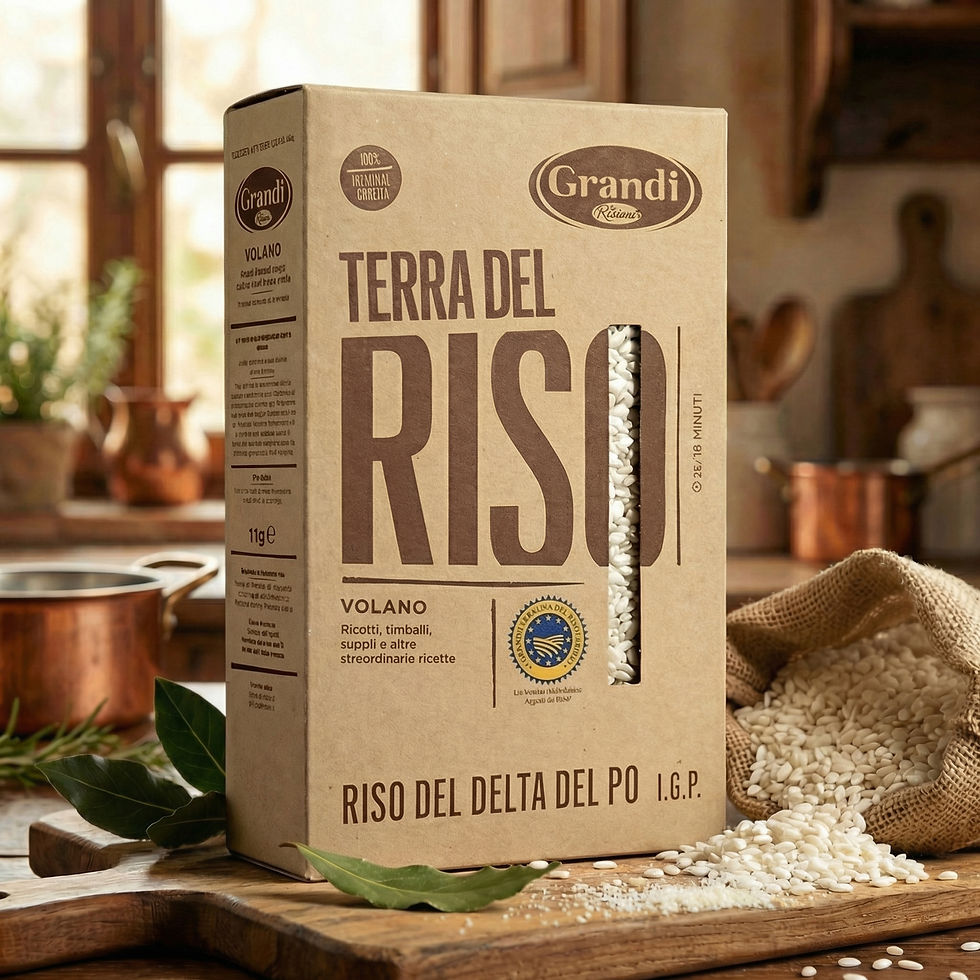
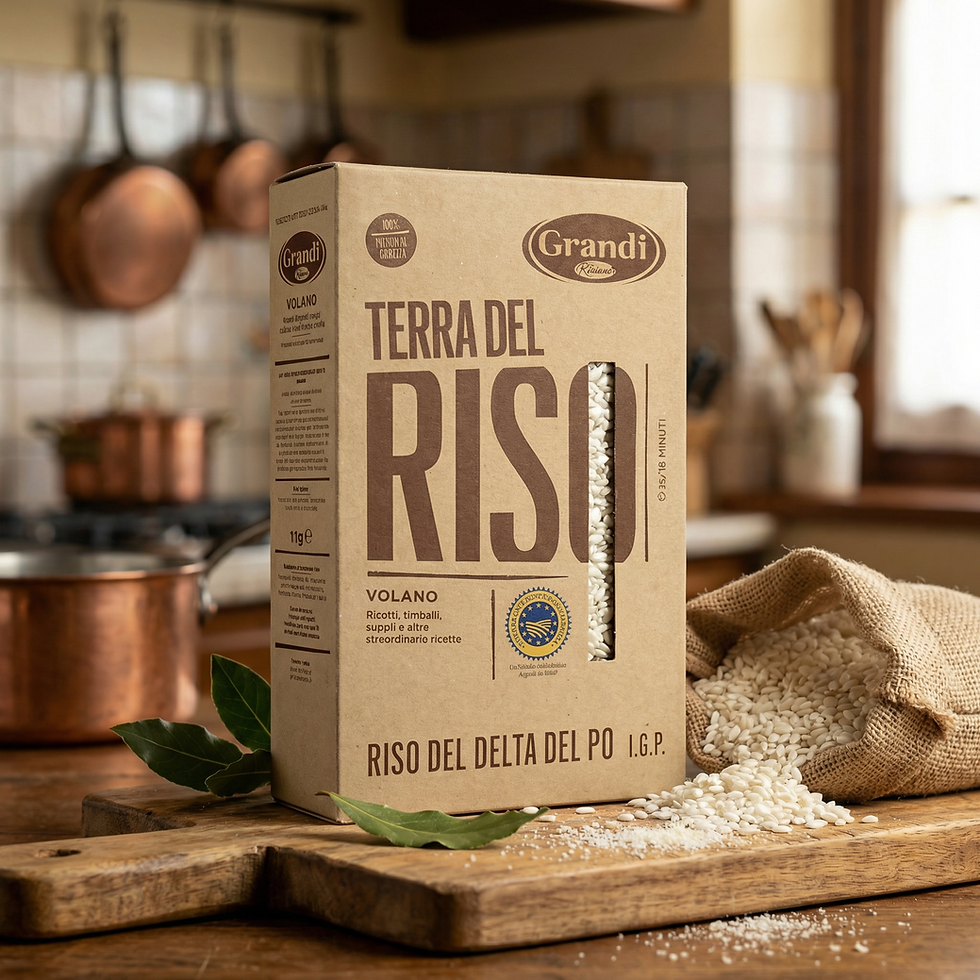
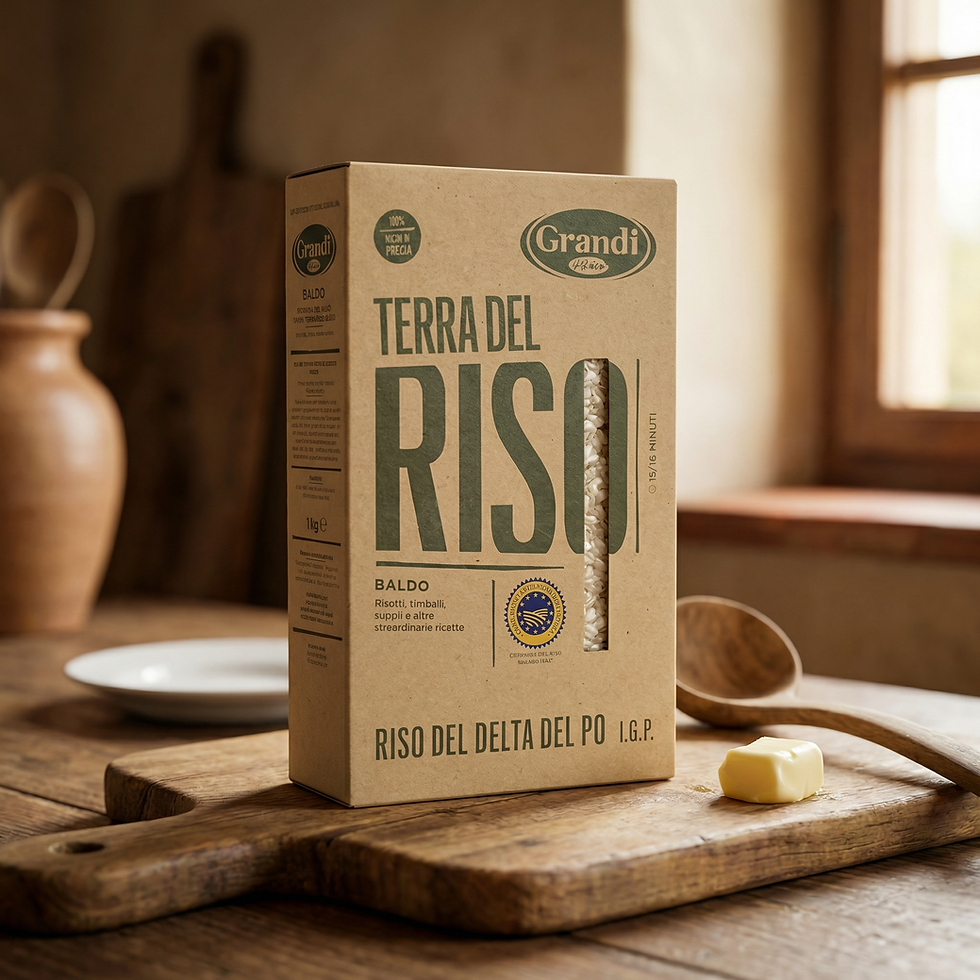
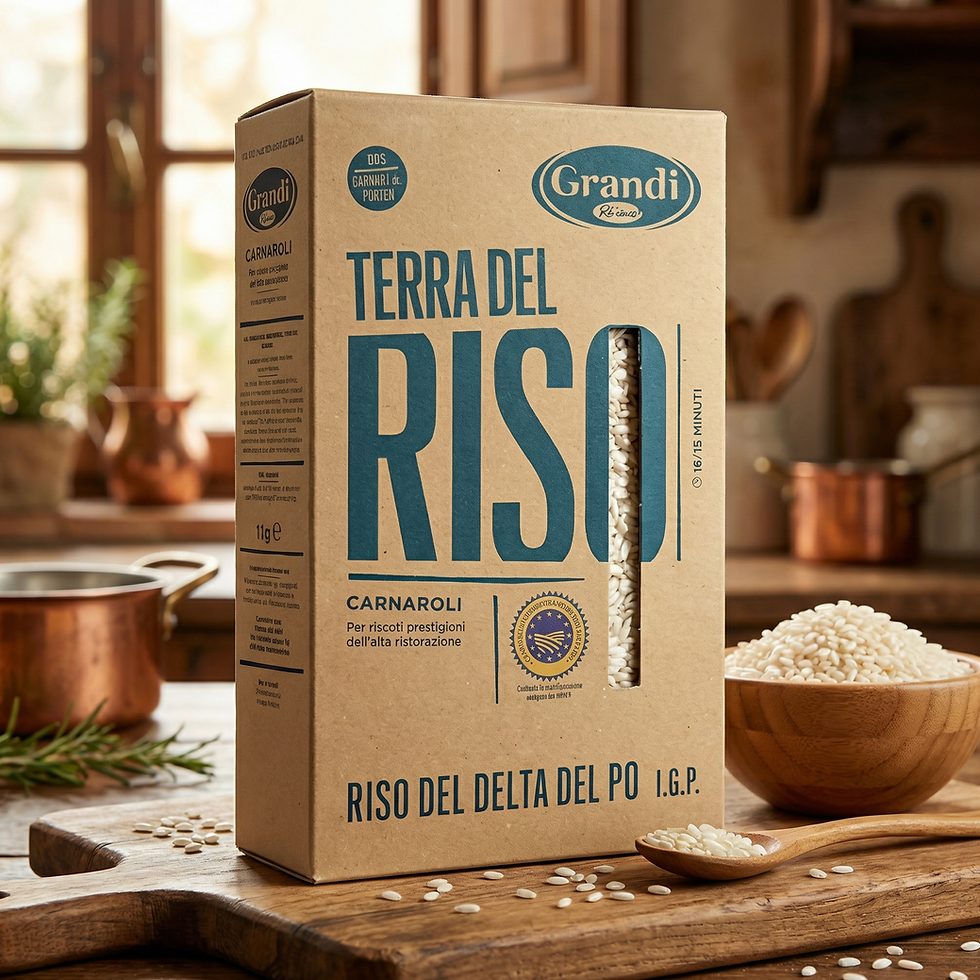
PGI Po Delta Rice refers to the product obtained from the cereal belonging to the species Oryza sativa L., subspecies Japonica, Superfino group, in the varieties: Carnaroli, Arborio, Baldo, Volano, Caravaggio, Cammeo, Keope, Telemaco and Karnak.
This is the pure Arborio version, meaning that all the grains have the same size and origin, without being mixed with similar grains of other varieties: this way you are sure to buy only Arborio rice.
A characteristic of Arborio rice is its very low environmental impact cultivation.
For Arborio rice, it is essential to pay attention to cooking times, given its low cooking firmness. Cooking times are indicated on the package.
The production area of Rice of the Po Delta PGI includes the territories of the municipalities of Ariano nel Polesine, Porto Viro, Taglio di Po, Porto Tolle, Corbola, Papozze, Rosolina and Loreo, in the province of Rovigo in the Veneto region, and the municipalities of Comacchio, Goro, Codigoro, Lagosanto, Massa Fiscaglia, Migliaro, Migliarino, Ostellato, Mesola, Jolanda di Savoia and Berra, in the province of Ferrara, in the Emilia-Romagna region.
All cultivation and processing operations are aimed at guaranteeing the quality, tradition and traceability of the product. The high natural fertility of the land and the particular climate often make the use of fertilizer superfluous, which is used only when necessary. The seeds must come from selected and certified batches. The paddy field cannot insist on the same land for more than eight years, after which it will have to rotate for at least two years. The sowing takes place in late spring (May) while the harvest takes place in September / October. For the drying phase, dryers are allowed that do not leave combustion residues or foreign odors on the glumellae. Dried rice must have a moisture content of less than 14%. All processing steps must take place in authorized and controlled establishments.
The first official document on rice dates back to 1475; in it Galeazzo Maria Sforza, Duke of Milan, sends a precious load of rice to Ercole I d'Este, Duke of Ferrara, extolling its virtues. The choice of the Este family to invest in rice cultivation proves to be providential: the new land, together with the climate, are particularly suitable for hosting the precious white grains. Between the eighteenth and nineteenth centuries, important Venetian families started further reclamation works that aim to extend the rice fields throughout the delta territory, contributing to the enhancement of these areas still poised between land and water. Its qualities were certified in 1950 by a declaration by Viscardo Montanari, Head of the Department of the Compartmental Agricultural Inspectorate of the Venezie, who exalts its qualities, considering it to be among the finest in Italy. The disastrous floods of the fifties e sixties of the twentieth century deal a severe blow to the spread of rice cultivation, which resumed only in the nineties, to then continue into the new millennium with the PGI recognition and the birth of Protection Consortium.
Excellent for risotto of all kinds, especially if left slightly al dente. Perfect with fish, such as mussels, clams and seppie. A really tasty recipe is the strawberry risotto and balsamic vinegar of Modena PGI.
100% pure Arborio rice







Reviews