


Parma Ham PDO
Product weight: 2 kg (approx.)
Minimum ripening: over 22 months
The product arrives under vacuum and ready to slice
The production process of Parma ham PDO is illustrated
IMPORTANT: The weight of the sausages being artiginali can never be accurate to detail. If there are differences in weight, we will compensate for small weight differences by varying the quantities of other products in the cart, but there will never be price changes.
Parma Ham PDO - slice "2 kg"
Parma Ham PDO is a raw and seasoned sausage product obtained by processing the fresh legs of pigs of the breeds listed in the Italian Herd Book.
The area of production and processing of Parma Ham PDO includes part of the territory of the province of Parma, in the Emilia-Romagna region. The pigs used were born and raised in the regions of Emilia-Romagna, Veneto, Lombardy, Piedmont, Molise, Umbria, Tuscany, Marche, Abruzzo and Lazio.
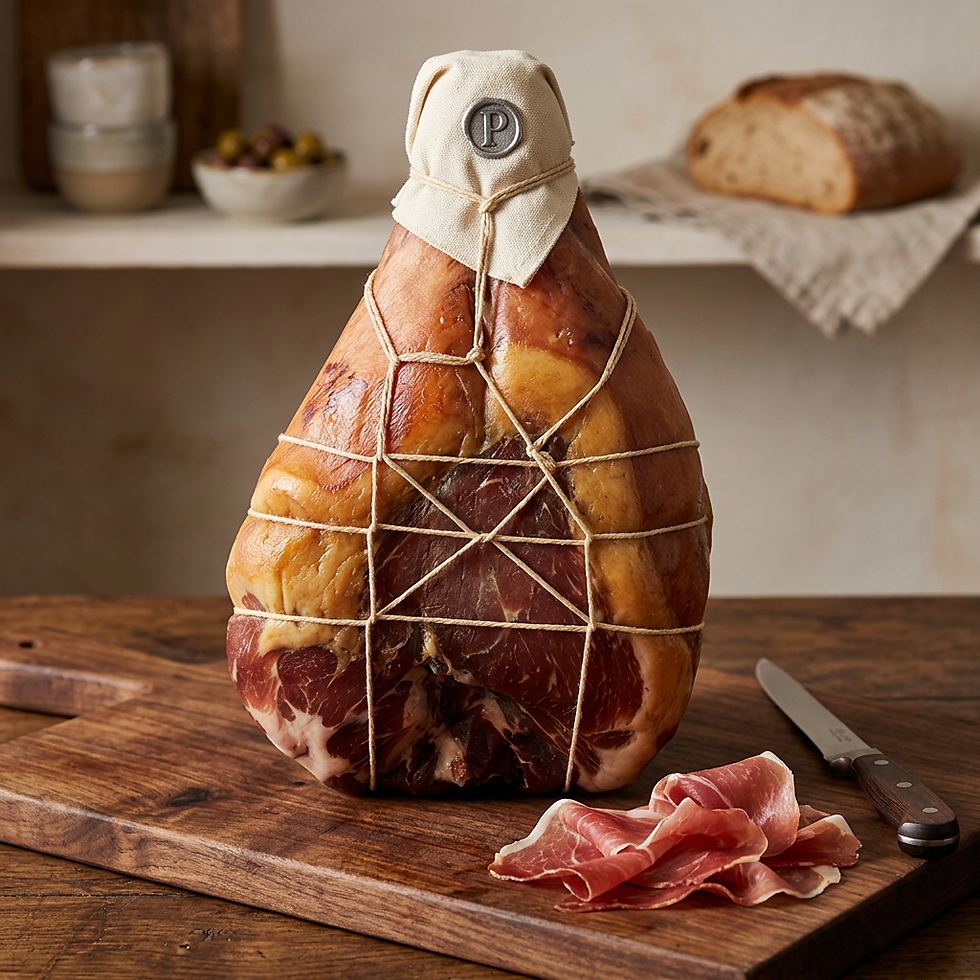
The pigs used must be at least nine months old and have an average weight of 160 kg. After slaughtering, the legs are chilled for a whole day, then trimmed to give the characteristic rounded 'chicken leg' shape, which also facilitates salting for which only sea salt is used without the addition of preservatives or additives. The legs undergo a light second salting and remain in the salt cellars for a total of one month. Once the residual salt has been removed, the legs are placed for a period of 60-90 days in resting cells at a suitable temperature and humidity. The ham is then washed in lukewarm water to remove all impurities. During the pre-seasoning phase, the hams are hung on the traditional 'scalere' and left to dry for 6-7 months, in large rooms with opposing open windows depending on the climatic conditions both inside and outside. In the sixth month, the uncovered muscular part is then softened with a thin layer of suet, a mixture of pork fat, salt and pepper. In the seventh month, the hams are transferred to the cellar for curing. After 12 months from the start of processing, inspectors from the certifying body carry out the sampling operations, an olfactory examination carried out with a horse bone needle. At this point, the hams deemed suitable are branded with the 'Corona Ducale' mark.
Parma Ham PDO boasts ancient origins. The first evidence of ham processing in the Parma area dates back to Cato in the 2nd century BC. From the year 1000 onwards, ham became increasingly important. Between the 13th and 14th centuries, the Corporazione dei Beccai (pork butchers' guild) was formed in Parma, which dealt with the production of pork meat. The guild split in 1459, when the Lardaioli, those who slaughtered pigs and salted their meat, decided to form a separate guild.
Characteristics
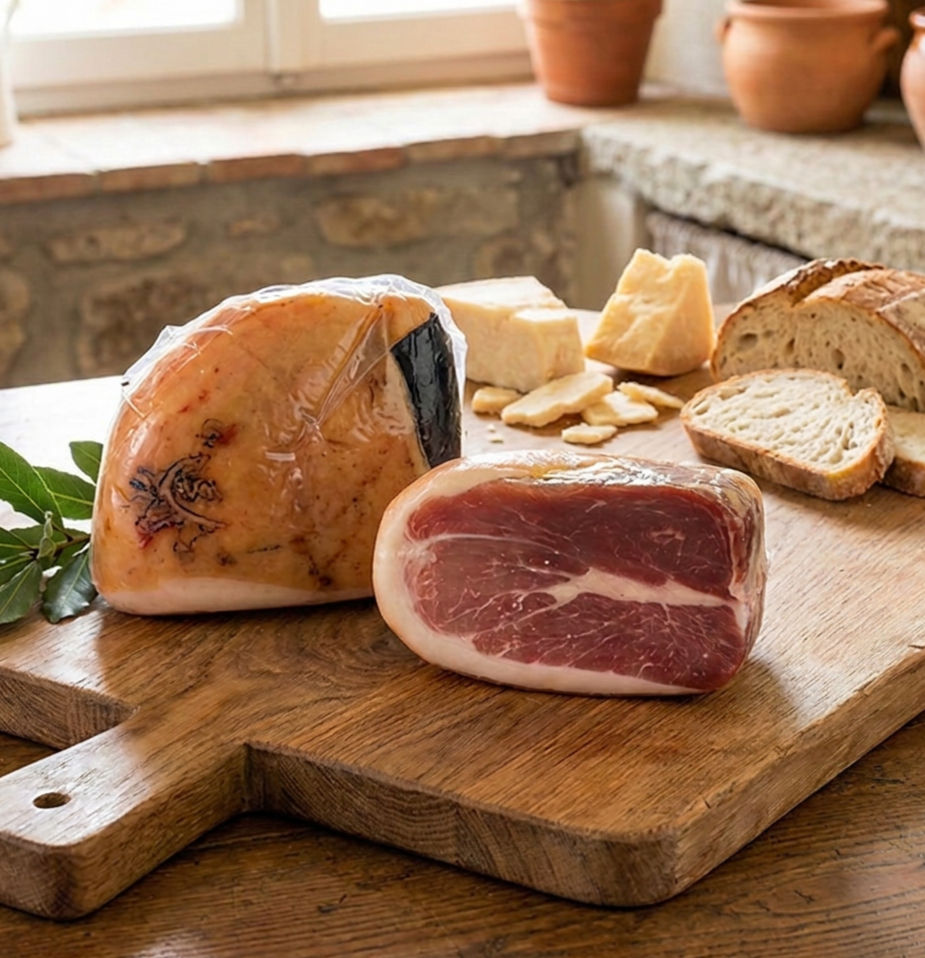
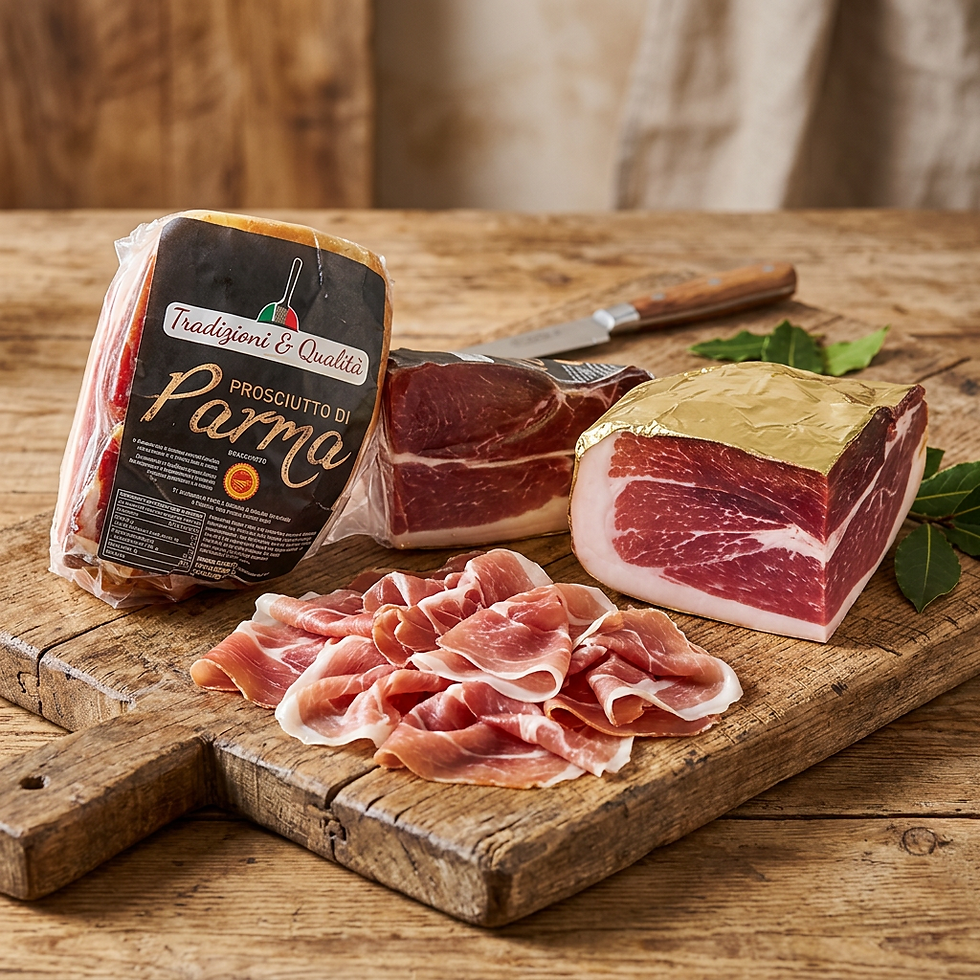
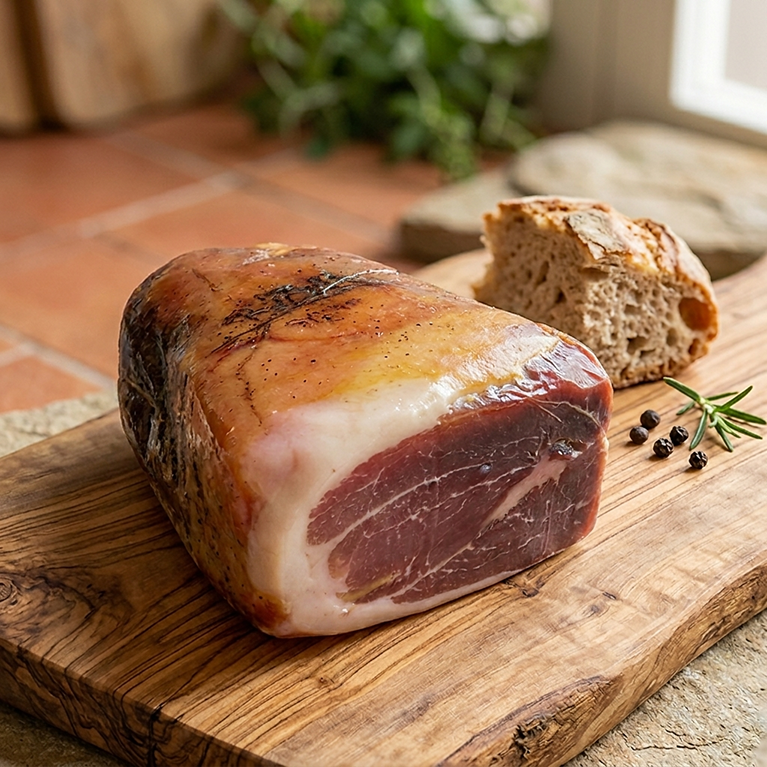
Parma Ham PDO has a rounded shape and has no leg. When cut, the slice is pink in the lean part and white in the fat part. The taste is delicate and sweet, the aroma is fragrant, but the tastes, aromas and flavors, both of the lean part and of the fat, obviously vary from seasoning.
A product that totally identifies Made in Italy food and especially Emilia. Envied and tried to copy all over the world, without ever succeeding. Parma ham PDO owes its goodness to its genuineness, in fact neither additives nor artificial preservatives are used, but only pork meat and salt, nothing more.
Pairings
You can taste Parma Ham PDO whenever and however you want.
You can create delicious appetizers, appetizers, main courses or even unique dishes. It goes well with white and whole wheat bread or with dumplings or fried cake.
For lovers of tradition, the most popular dish is definitely the sandwich with ham, but it also becomes excellent as a filling of the Piadina Romagnola PGI.
Ideal to combine with fresh cheeses, soft, but also seasoned to make wonderful boards of cheeses and meats.
An excellent traditional pairing, especially in summer, sees raw ham marry perfectly with sweet fruits such as melon, apples or pears.
Finally, as for wines, we recommend to match sparkling wines such as Lambrusco or Malvasia, as well as still reds such as Sangiovese.
Pork meat, salt.








Reviews
Buon profumo, texture naturale e risultato complessivamente convincente. Demo review.
Sabor equilibrado, textura agradable y una impresión general muy positiva. Reseña demo.
Balanced taste, pleasant texture and a very positive overall impression. Demo review.
God aroma, fin tekstur og samlet set meget overbevisende. Demoanmeldelse.
Zuivere smaak, natuurlijk gevoel en een verzorgd product. Demo-review.