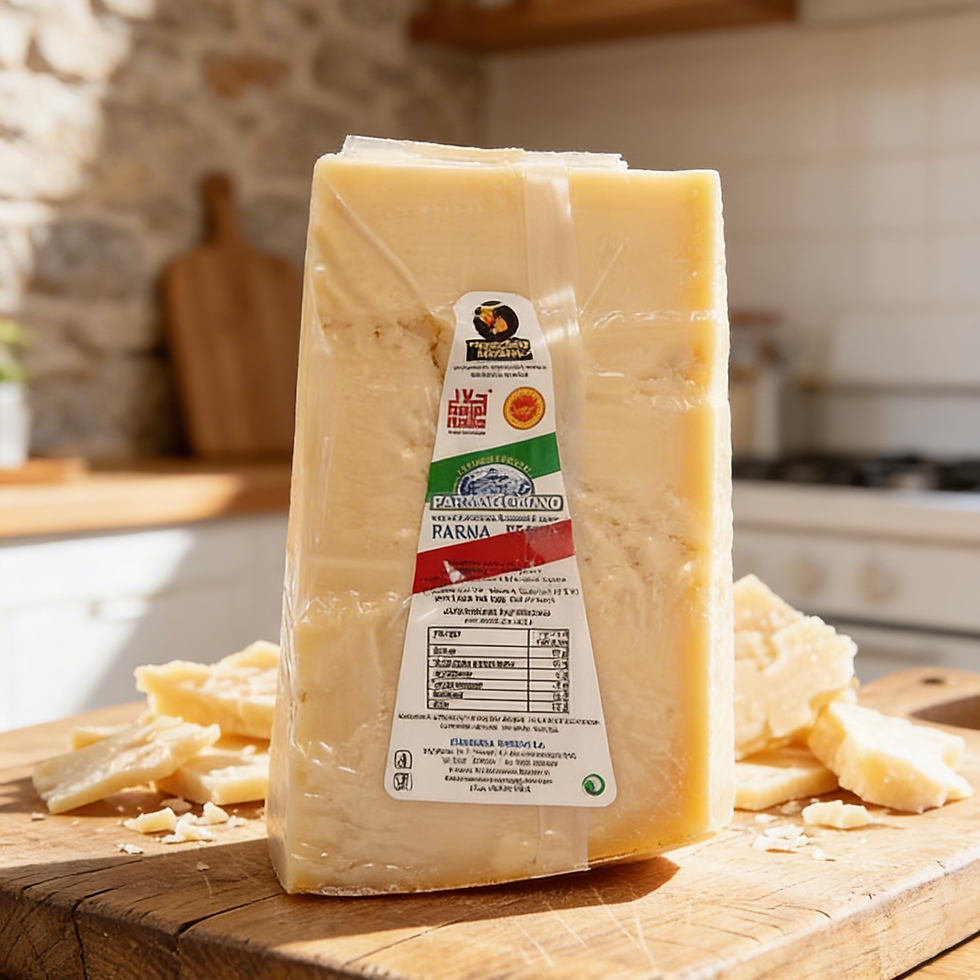
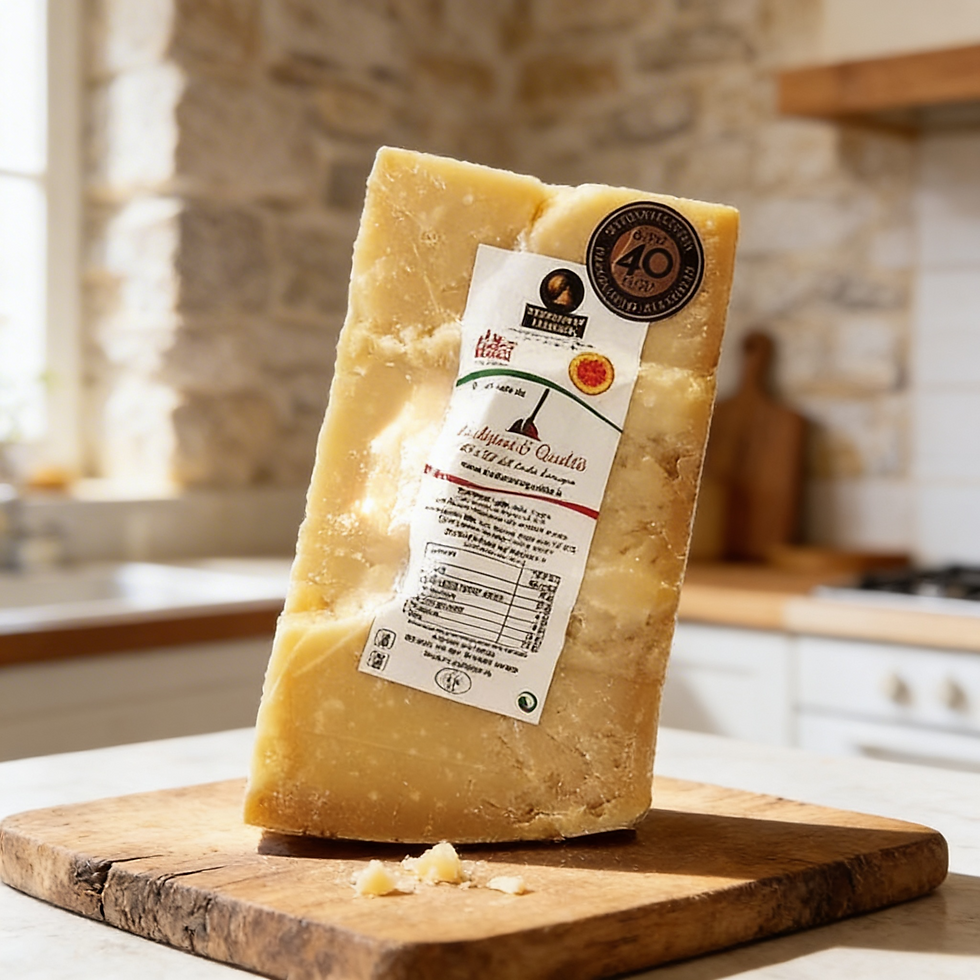
Fossa cheese from Sogliano PDO of "Pecorino" type, 1/4 wheel
Product weight: 0.350 kg
Manufacturer: Caseificio Val d'Aspa
The product arrives vacuum-packed and ready to use.
Fossa di Sogliano cheese PDO - "Pecorino"
Fossa cheese from Sogliano PDO, a hard or semi-hard cheese, is produced with whole cow's milk, sheep's milk, or a mixture of the two (80% cow's milk and at least 20% sheep's milk). The animals from which it is made must come from farms in the production area and belong to the Frisona Italiana, Bruna Alpina and Pezzata Rossa breeds of cattle and their crossbreeds, and sheep of the Sarda, Comisana, Massese, Vissana, Cornella Bianca, Fabrianese, delle Langhe and Pinzirita breeds and their crossbreeds.
The production area of Fossa cheese from Sogliano PDO includes the provinces of Forlì-Cesena, Rimini, Ravenna and part of the province of Bologna in the Emilia-Romagna region and the provincial districts of Ancona, Macerata, Pesaro-Urbino and Ascoli Piceno in the Marche region.
The milk, which comes from two daily milkings, can be used either raw or pasteurised; if raw, it must be processed within 48 hours of the first milking. Coagulation takes place with the addition of natural rennet at 30-38 °C. After the curds are broken and the cheese is moulded, it is salted and pre-matured for between 60 and 240 days. Next, the cheese is placed in natural cotton sacks to be sunk into the characteristic sandstone rock pits. When the pit is empty, it is kept closed by covering it with wood and adding sand or stones. Before use, the pits are sterilised with burnt straw and the walls are covered with straw and wooden sticks. Once filled with cheeses, the pits are covered with straw and sealed with chalk or sandstone mortar. The cheeses are removed from the pits after 80-100 days of ripening.
The practice of maturing in pits dates back to the Middle Ages and was used to save food from the numerous raids of invaders passing through Romagna and Le Marche. The earliest records of pit maturing techniques date back to the 14th century and are preserved in the archives of the Malatesta family, owners of the area. Fossa cheese from Sogliano is mentioned in two inventories dating back to 1497 and 1498, which show that even at that time special contracts were drawn up for the rental of pits to ripen cheese.
Characteristics
Fossa cheese from Sogliano PDO varies in colour from ivory white to straw yellow. The cheeses have an irregular structure, absent or barely noticeable rind, and weigh between 500 and 1900 g. The paste has a semi-hard consistency, easily crumbly, and is amber-white or straw-coloured. The smell is very strong with hints of sulphur, mould and truffle. The flavour varies according to the milk used: "Pecorino" has an aromatic, pleasant, intense and slightly spicy taste. "Vaccino" is more delicate, slightly acidulous and salty with a bitter aftertaste. "Misto" has a balanced taste, with slight bitter hints.
Pairings
In the typical cuisine of the Emilia-Romagna and Marche regions, it is used as an ingredient in the preparation of numerous recipes, such as the traditional 'erbazzone . With first courses such as Passatelli and asparagus or Passatelli in broth, tortelloni, minestrone, but also with first courses and truffle, grated or in flakes, the aromatic notes reach interesting peaks. We can pair Fossa cheese from Sogliano PDO as an aperitif or appetiser with apricot or peach jams, but also with figs, pears or walnuts. Also perfect with Acacia honey.
Excellent paired with red wine, such as Sangiovese di Romagna, the important thing is that the wines are full-bodied and structured; in fact, pairing with wines that are too young is not recommended.
Sheep's milk, salt, rennet, cultures.